

The Hidden Performance Lever Most Companies Ignore: Trust
By Anuva Arrya Sharma
Have you ever wondered why some teams seem to have it all together, even as they manage multiple deadlines and high-priority projects, while other teams seem to fall apart even when their workload appears more manageable on the surface?
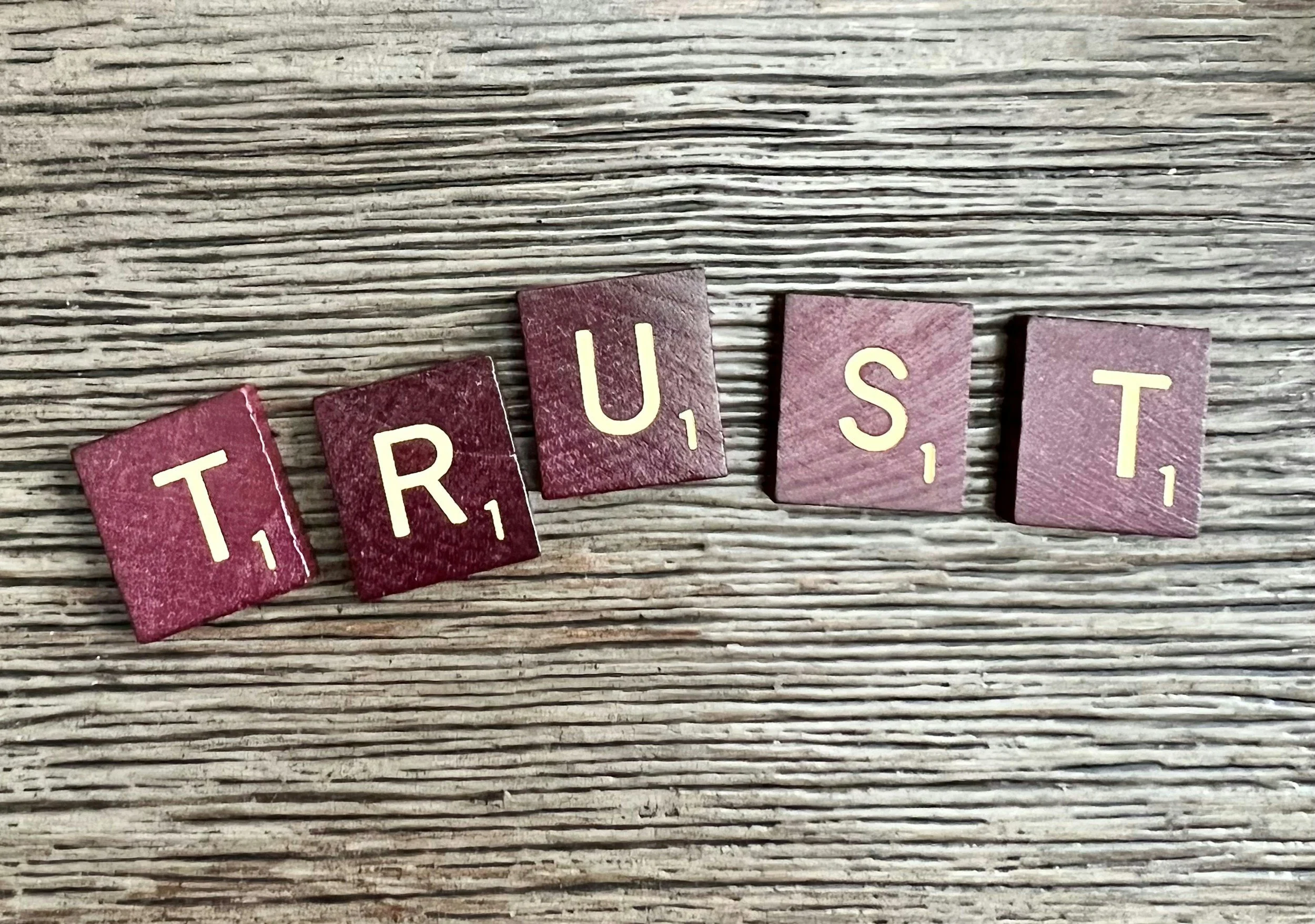
Scrabble tiles, spelling out the word trust.
Whether you are early in your career, a seasoned professional, or a team lead yourself, your level of trust in your team and organization can make or break your experience at work.
Low-trust workplaces experience 40% more burnout, 76% lower engagement, and 74% more stress. But low trust isn’t just a culture problem; it’s also a significant business risk.
Research from Great Place To Work (2025) shows that organizations with high trust consistently outperform expectations, often exceeding the S&P 500 by 30 to 50 percent. While large enterprises often benefit from significant organizational prestige ( or as I like to call it, ‘workplace clout’), the truth is, you do not need to be a Fortune 500 company to achieve exceptional results.
*Organizational Prestige is commonly noted as the influence, credibility, and prestige gained through association with a well-known brand (Cable & Turban, 2003). Employees are often attracted to these organizations because of both extrinsic and intrinsic factors, but perceived trust does not always translate to real trust in practice.
Trust is more than just a “nice-to-have” at work; it’s a must. Not only for employee well-being, but for organizational growth and productivity.
Small to medium-sized businesses can generate powerful outcomes by cultivating high-trust cultures, proving that performance advantage comes not only from brand prestige, but from the strength of the workplace environment itself
So, Why Does Trust Impact Performance so Drastically?
Trust isn’t just cultural, it’s operational. It directly affects how fast your organization moves, how much energy your people bring, and whether they stay or leave for an organization that values them more. Research shows that trust drives 3 crucial factors: speed, energy, and retention
1. Speed
When trust is present:
Decisions require fewer approval layers
Conversations are more candid
People spend less time protecting themselves
Teams focus on solutions instead of office politics
Stephen M. R. Covey, author of The Speed of Trust, argues that trust is a measurable economic driver because low trust creates a “trust tax,” which is defined as the added friction, delays, and oversight that slow execution.
2. Energy
Low-trust environments can be mentally exhausting, even when your workload is manageable.
When employees don’t feel safe:
They second-guess decisions
They withhold ideas
They operate defensively
They conserve effort
According to Psychological Safety and Learning Behavior in Work Teams, Amy C. Edmondson first introduced the concept of psychological safety as a shared belief that members of a team can take interpersonal risks without fear of negative consequences (Edmondson, 1999). Subsequent research has consistently shown that teams perform better when people feel safe to speak up without fear of embarrassment or punishment (Gallo, 2023)
3. Retention
Ever heard of the saying “people don’t leave companies, they leave cultures”? This isn’t just something we say; it is well supported by engagement research. According to Gallup (2026), managers account for at least 70% of the variance in employee engagement. Engagement strongly correlates with turnover, absenteeism, and performance.
When trust is low:
Employees feel unheard
Feedback feels unsafe
Contributions feel invisible
Growth feels uncertain
On the contrary, when trust is high:
Employees feel valued
Expectations are clear
Communication is transparent
Leadership is credible
Retention is not just about compensation. It’s about whether people feel safe, seen, and respected. Think about times when you felt supported at work. Did it make you feel appreciated and valued as an employee? Perhaps it made you want to work harder?
I experienced this firsthand during an early-career experience where my manager trusted me to redesign the organization’s sponsorship strategy, openly sharing the organization’s funding challenges and giving me ownership of the solution. Instead of simply updating the design, I proposed a new, more accessible sponsorship tier to attract diverse sponsorships from small to medium-sized businesses (earlier, the priority had been to secure sponsorships with larger ones). Since my supervisor trusted me to come up with a solution that would make sense for the organization overall, I worked harder, thought bigger, and delivered more than what was initially asked. Trust didn’t just make me feel supported in the work that I did; it elevated my performance. Two key outcomes from here emerged: the organization continues to benefit from the sponsorships secured during this time, fueling growth, and my manager remains an incredible mentor to me several years later. To this day, I reflect on this career win very fondly.
So the question is no longer whether trust matters. Research and personal experiences show us that it does. The real question is: how intentionally are you cultivating it within your organization?
At Empowered, we explore how trust shapes performance, the small everyday behaviours that quietly erode it, and the practical actions leaders can take to rebuild it. Michelle’s keynote, Trust Debt: The Everyday Moments That Build or Break Culture, unpacks why so many organizations are operating at a trust deficit and how to reverse it.
Strong performance doesn’t happen without trust. If you want your team to thrive, stay engaged, and stick around, this conversation is essential. Book the Keynote Today
Not sure where your organization currently stands? Start with our free Trust Audit to help you assess company culture and identify next steps. Trust Audit
Follow Empowered to stay tuned for more information on how your organization can build trust and achieve amazing results.
Anuva Arrya Sharma
Operations Consultant
👉 Contact us at livempowered.ca
Sources
Beck, R. J., & Harter, J. (2014, March 25). Why great managers are so rare. Gallup. https://www.gallup.com/workplace/231593/why-great-managers-rare.aspx
Cable D. M., Turban D. B. (2003). The value of organizational reputation in the recruitment context: A brand-equity perspective. Journal of Applied Social Psychology, 33(11), 2244–2266.
Covey, S. M. R. (n.d.). The Speed of Trust. FranklinCovey Co. & CoveyLink, LLC. https://speedoftrust.com/
Edmondson, A. C. (1999). Psychological safety and learning behavior in work teams. Administrative Science Quarterly, 44(2), 350–383. https://web.mit.edu/curhan/www/docs/Articles/15341_Readings/Group_Performance/Edmondson%20Psychological%20safety.pdf
Empowered EDI. (2026). High-trust organizations outperform the S&P 500 [Video]. Empowered EDI.
Gallo, A. (2023, February 15). What is psychological safety? Harvard Business Review. https://hbr.org/2023/02/what-is-psychological-safety
Great Place To Work. (2025, June 3). Why the Fortune 100 Best Companies outperform the S&P 500 by 2,000%. LinkedIn. https://www.linkedin.com/pulse/why-fortune-100-best-companies-outperform-sp-500-bdw2c